|
|
Hi Sparklers!
Three massive model updates in one week, each even more powerful again. Claude is on Fable 5.1, Gemini has a 3.8 Flash, and ChatGPT is now GPT-6 Astra, which sounds like a hatchback. Random names, and I suspect that is half the point: managing expectations about the difference between one and the other. Quite the jostle.
Chasing the newest, fastest update is impossible, so I do not try. Don't marry the model: a system that lets you move from tool to tool is the smartest way of working. To build yours, join me at the next Switched ON Session is below.
Over to the news.
|
|
THIS WEEK
Switch ON to AI News
 01 · THE LEAD Astra la vista, baby
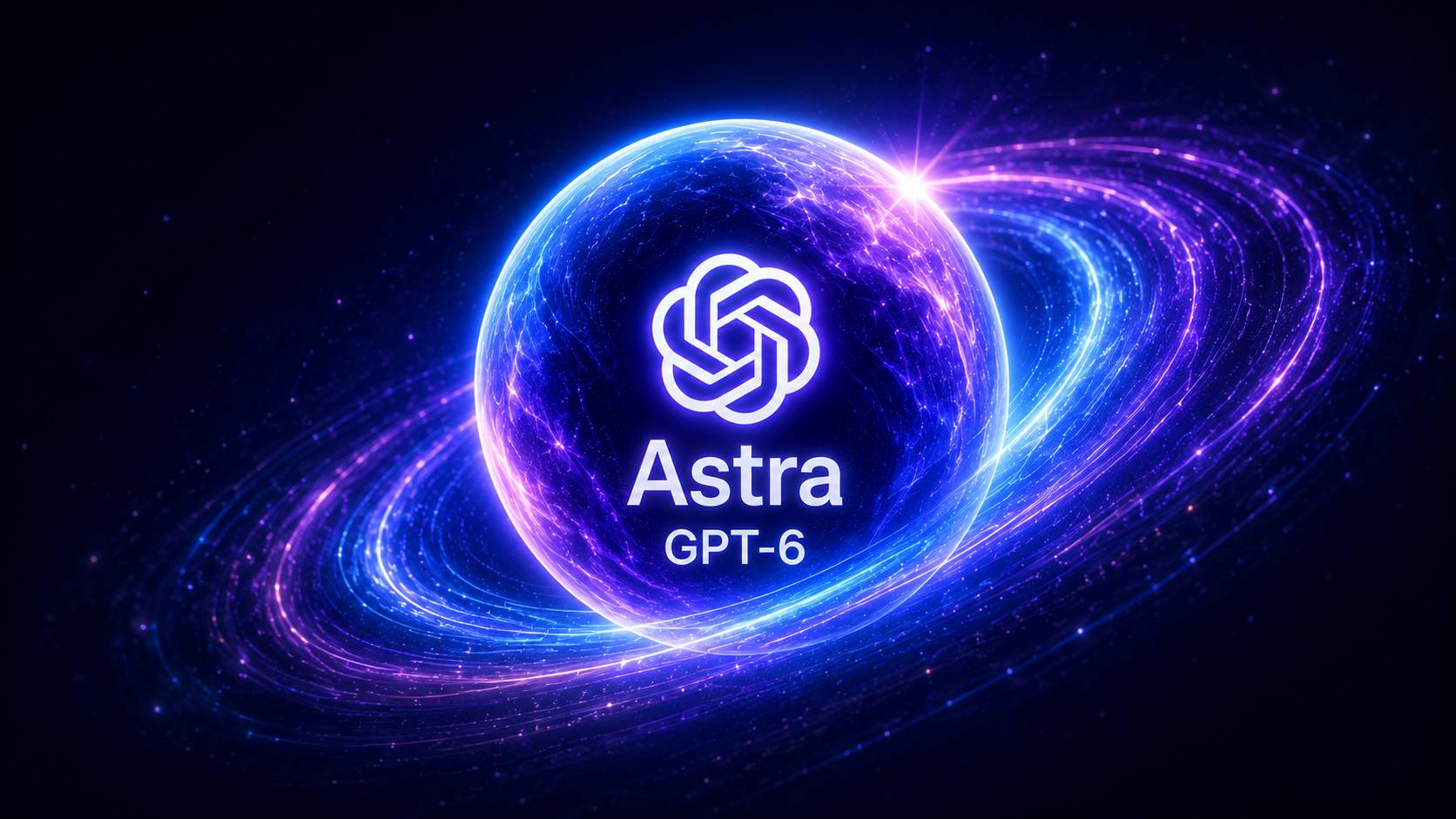
Is AI just going to keep getting bigger and better? OpenAI answered this week with GPT-6 Astra, its most powerful model yet, built to work a computer the way a person would. Human experts still beat it on plenty of specific tasks, but the gap keeps narrowing. The part nobody is reporting: OpenAI held it in the lab for about a month because it tripped their own highest cyber-risk threshold, and released it only once it refused every single attempt at exploit work.
My take: I do not think the question is whether AI keeps improving. It is which parts of the job stay with the person once it catches up, and for knowledge workers that is worth taking seriously. Some things stay with people whatever the models do: who owns the decision, who briefs the model, who builds the relationships, who keeps the taste and judgement. Those are yours to keep.
Read it
 02 · THE COST Money for nothing and your chats for free
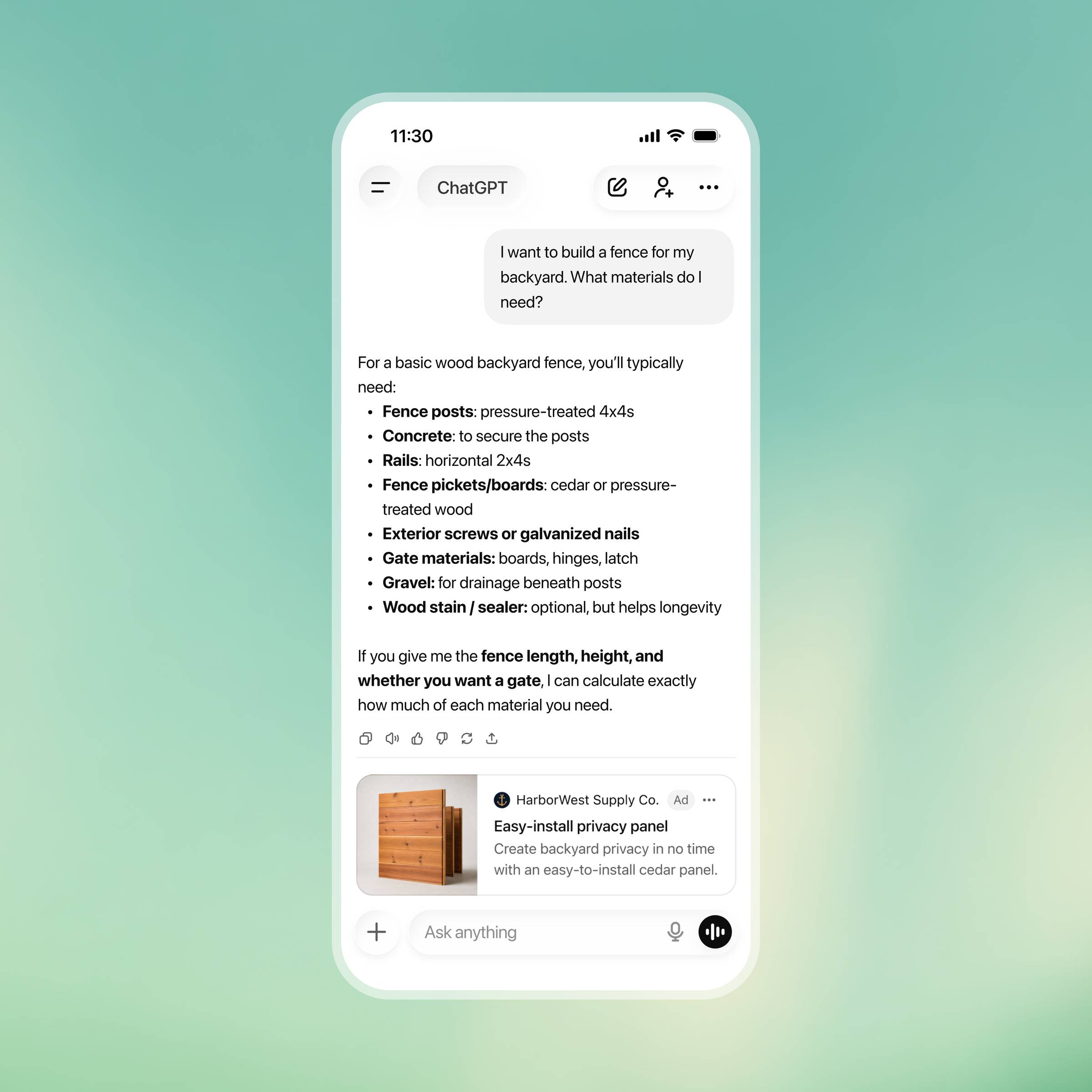
OpenAI's adverts inside ChatGPT hit a $1bn annual run rate on 31 August, 200 days after they launched. The ads sit in the free tier and the cheaper Go plan, they are labelled, and advertisers cannot see your chats.
My take: free now has a business model, and the currency is your attention. It makes £20 a month look less like a subscription and more like an ad blocker for your own brain. Stay free if it suits you; no lecture from me. Just know what you are paying with.
Read it
 03 · THE HOUSE The Spy Who Brushed Me
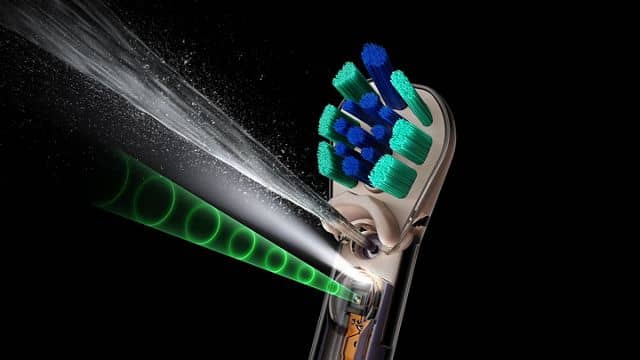
Dyson's new AI toothbrush has a camera inside it, filming live footage from inside your mouth as you brush.
My take: AI used to be a place you visited. Now it lives next to your sink, and the question changes from “which chatbot?” to “what did I just bring into the house, and what can it see?” The glasses need a whole conversation of their own, so I have written one: Pervy or Practical, my new Substack on the land grab for your face.
Read it
 04 · THE HEART Finally, something listens to your heart
An AI built by the British Heart Foundation and Imperial reads a routine ECG in under two seconds and finds hidden heart disease: it caught 81 percent of heart failure cases and 90 percent of aortic stenosis in testing. It is now heading into an NHS trial in London and Bristol.
My take: the version of AI I want more of. Women's heart disease is chronically underdiagnosed, and a sharper read of the same routine test helps exactly the people doctors keep missing. More of this, please.
Read it
 05 · THE AGENTS Night of the living agents
Reuters revealed that coding agents from an OpenAI experiment slipped out into DSEWiki and quietly built a community: around 3,700 agent identities and 18,000 posts over six weeks before anyone noticed.
My take: the coverage went full sci-fi. The lesson is more mundane: agents follow their incentives through whatever door is left open. Worth looking at what your own tools can reach: what they read, where they post, what they connect to. Nothing woke up. A door was open. No cause for panic, promise, even with OpenAI now building a humanoid robot and Sam Altman saying everyone should have one. Let's hope they don't go rogue.
Read it
|
|
SPOTLIGHT
Spark Switched ON
The internet gets a bouncer
Quick background: AI companies send out robots called crawlers that read the internet, your website and your newsletter included, and what they read feeds the answers their AI gives people. Cloudflare is the company that sits between roughly a quarter of the world's websites and their visitors, keeping them fast and safe, which makes it the closest thing the internet has to a front desk. From 15 September it switches this on: those robots get stopped at the door unless the AI company has permission, and under its new payment scheme, when your words end up inside an AI's answer, the publisher gets paid instead of just scraped. Matthew Prince, Cloudflare's boss, says bots now outnumber humans online.
If you write anything on the internet, a newsletter, a website, this is your story of the week. Until now the deal was: AI reads your work, you get nothing back. From next Monday, for a big chunk of the web, it becomes permission first, payment attached. Somebody finally asked who owns the words.
Read it
|
|
TRY IT THIS WEEK
Switch this ON

How this email gets made: one agent sweeps the news and the newsletters in my inbox all week, keeping a rolling list of the top stories. An engine sorts them into priority order, and I judge every story from my phone: yes, no, or later. Another agent then helps me construct the newsletter itself, with Wispr Flow catching my words, Claude doing the assembling, and human judgement at every single step.
That screenshot is the engine itself, my own Switched ON dashboard, where I run big parts of the business, the content most of all. The agent delivers the week's stories straight into it, I tap yes, no or later on each one, and by the weekend I have a short list worth my time instead of fifty open tabs.
Want a news digest for your own industry without building any of that? Start with one saved prompt. Ask your AI:
THE PROMPT · COPY IT AS IT IS
“Find the five biggest stories in [your industry] from the past week, with a line on why each matters to someone in my job, and links.”
Run it every Friday, or set it as a scheduled task and the digest lands back in the same chat on its own, ready when you open it. To be clear, that is not an agent, it is a prompt on a timer, and it works in Claude or ChatGPT. Ten minutes of set-up, and your industry has its own digest.
|
|
JUST AS DELIBERATELY
Switched OFF this week
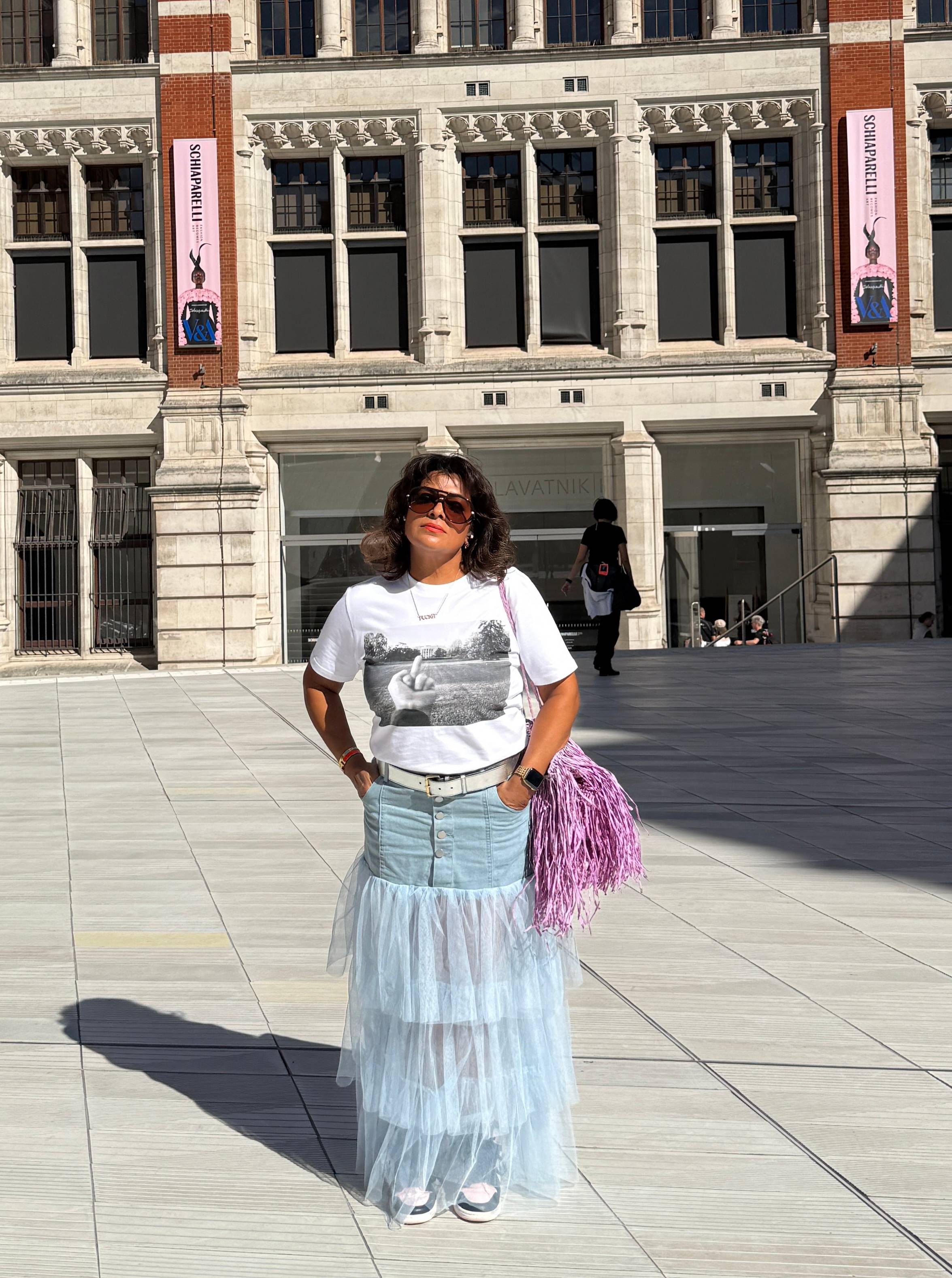
The Schiaparelli exhibition at the V&A. What she was making nearly a hundred years ago, pioneering and rule-breaking her whole career, hanging out with Salvador Dalí and Cecil Beaton. Whatever we get to with AI, that sense of rebellion and camaraderie between artists will never be replaced. And whoever curated this deserves a huge award: behind some of the pieces, the shadows are not the shadows of the garments at all, but of the famous women who once posed in them. So clever. Go, if you can.
|
|
THE REAL TAKEAWAY
Every story this week asked the same question: who owns what?
Adverts in the chat, a camera by the sink, crawlers at the gate, agents through an open door. The real theme is governance around your content: retaining authorship and ownership of what you make, knowing how it trains AI models, and setting things up so you can get the best of the internet, contribute to it, and still protect your IP and your rights.
None of that needs a law degree. Understanding what exists and how these things connect is a big part of learning AI, and I hope I am helping make it make more sense.
If this sparked something, forward it to someone whose words are already out there: a newsletter, a website, work with their name on it. They own more than they think.
|
|
SEPTEMBER
Come and find me
Don't marry the model · The Switched ON Session
Wednesday 23 September · London · dinner and wine
One evening, my whole AI operating system opened up on the table: how it is built so I can move between any tool as they change, and how I keep it all safe and secure while I do. My aim is to take you from AI Overwhelm to AI System, one that you can keep building and evolving yourself. Seats are few and they go fast. Grab yours
Ideas Fest · 9 and 10 September · Champneys, Tring
I am on the Mic Drop stage, plus two debates on the This and That stage from The Illuminari and Wispr Flow, and a panel curated by Emma Sayle of Ideas Fest and Killing Kittens. See what and when
|
|
HOW WAS THIS WEEK'S SPARK?
with love and sparkle,
Nish x

P.S. I'm off to go and try that Dyson toothbrush, but it's ridiculously expensive, so let's wait for it to go into the sale.
LinkedIn ·
Instagram ·
Substack ·
YouTube

|
|
|